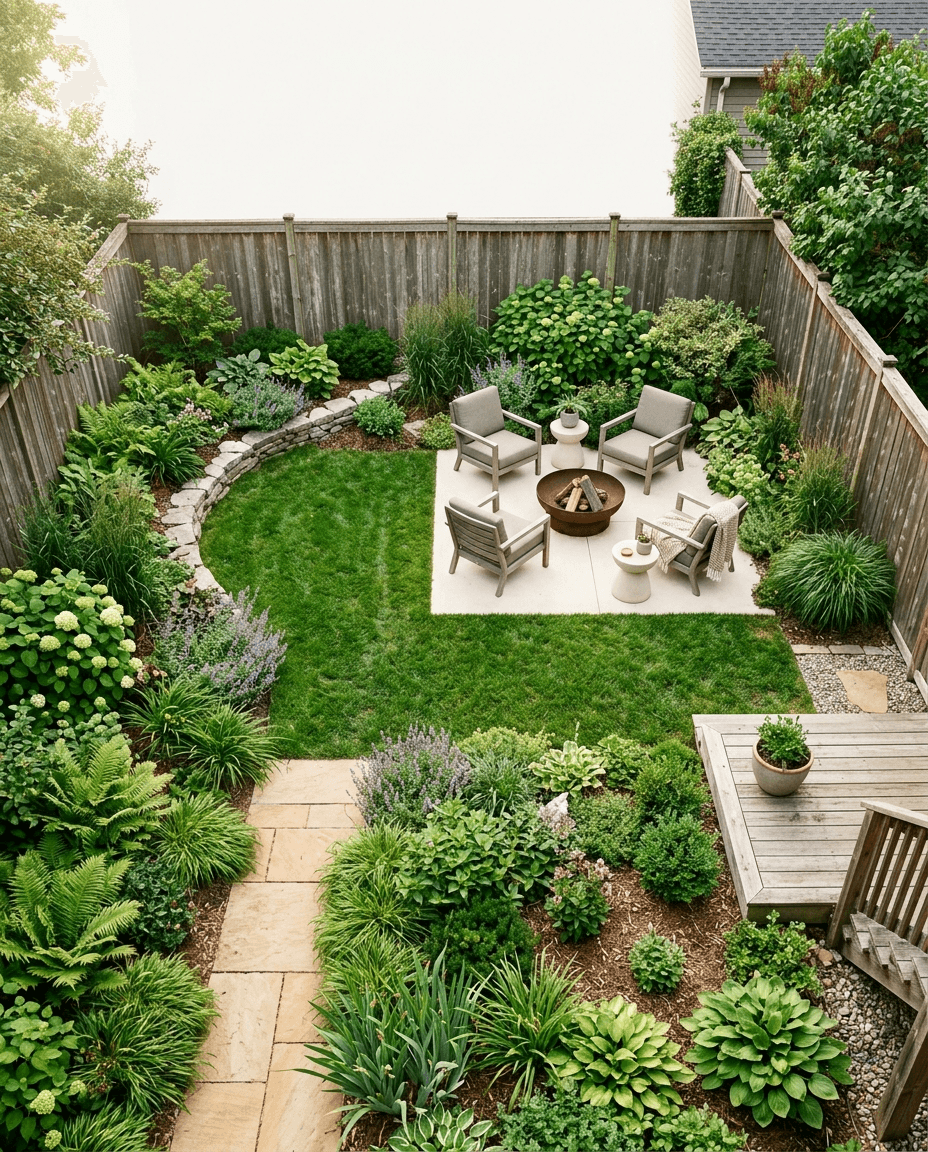
Privacy fence & hedge · Photo Listicle ·
27+ Backyard Fence Ideas That Will Make Your Neighbors Stop
Affiliate disclosure · Earthwork earns commission on some links
The fence is the part of the backyard you think about least until you replace it, and then it becomes the thing you look at most. Get it right and it disappears into the yard. Get it wrong and it reads as 200 linear feet of obligation.
Here are 27 backyard fence ideas tuned for how the fence actually performs across a decade: how it ages, how it works with planting, how it handles the lot-line awkwardness. Materials are specific, dimensions are real, and there's a price-per-linear-foot range on each so the budget conversation gets honest fast.
The living hedge that beats every fence
A solid hedge of 'Green Giant' arborvitae (8 to 10 feet at maturity, 36 inches on center) costs about $25 per linear foot to plant and looks intentional in three years. Lower-maintenance than a fence, doesn't rot, doesn't need staining, and the screening density increases over time instead of decreasing. The trade-off: needs 3 to 5 feet of yard depth for the canopy to mature. For tighter lots, swap to 'Sky Pencil' holly (12 inches wide at maturity).
Horizontal cedar slat (the modern classic)
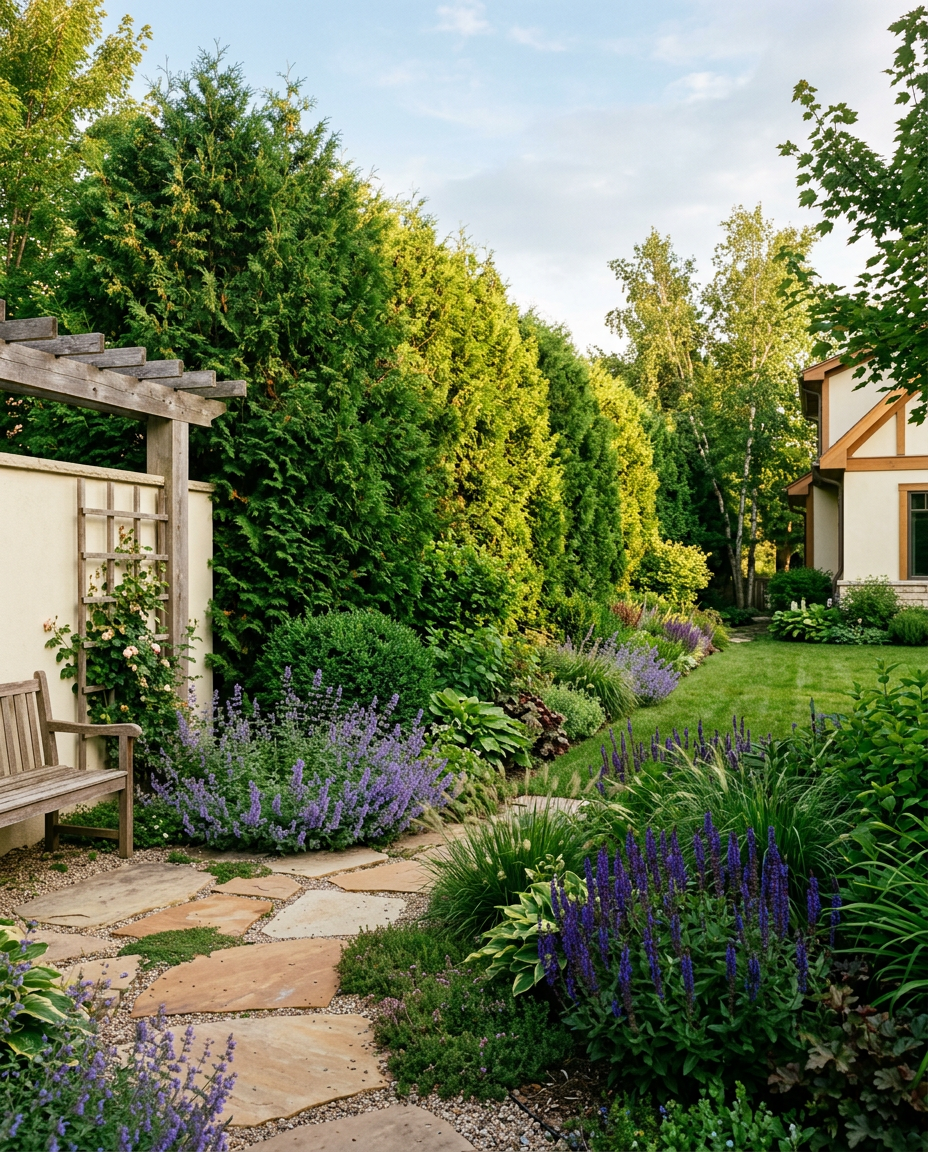
3.5-inch cedar slats run horizontal between 4x4 cedar posts on 8-foot centers, half-inch gaps between slats. Stains to silver in two seasons; pre-finish with Penofin or Cabot to keep the warm tone. About $32 to $48 per linear foot installed. Reads modern, ages well, pairs with any planting from contemporary to cottage.
The wood-and-wire combination
A 4-foot horizontal cedar fence at the base topped with a 2-foot black welded-wire trellis above. The wire panel disappears at 20 feet and grows climbing roses, clematis, or akebia. Total fence height: 6 feet, but only 4 feet feels solid. Costs about $28 per linear foot for the fence plus $8 to $12 for the wire-mesh top.
Black metal cattle panel (the unexpected one)
Standard 16-foot galvanized cattle panel cut to 8-foot sections, painted matte black, set in 4x4 cedar frames. The grid pattern is industrial-modern in a way that disappears against dark planting. About $14 per linear foot in materials. Best when paired with masses of ornamental grass on the inside face.
Stone wall with iron infill
A 30-inch limestone or fieldstone wall (dry-stacked or mortared) with 4-foot wrought-iron infill above, for a total 6-foot height that still feels open. Reads as historic estate work; pricey at $90 to $180 per linear foot but the lifespan is essentially forever. Best on lots where the front yard already has stone elements (a stone porch, a flagstone walk).
The cottage white picket
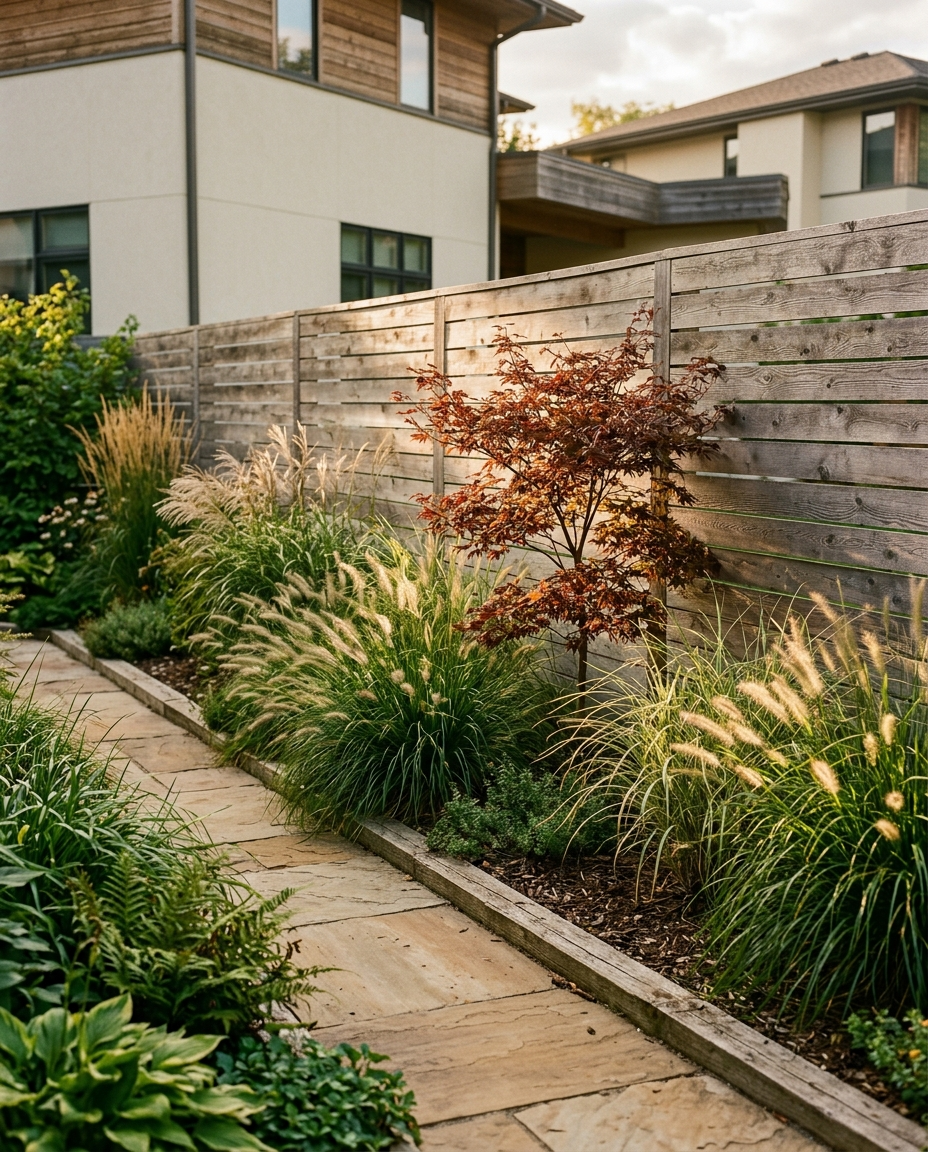
The 3-foot white picket fence at the lot line is the colonial-house answer, especially with a centered gate aligned to the front walk. Pre-built panels run $15 to $22 per linear foot; custom built-on-site cedar is $32 to $45. Re-paint every 4 to 5 years. Pair with catmint, lavender, or 'Limelight' hydrangea inside the line for the magazine version.
Lattice top on a board fence
A 5-foot solid wood fence topped with a 1-foot lattice panel for screening that doesn't read as a wall. The lattice gap diffuses sight lines and lets the planting on either side breathe. Costs about $30 per linear foot, including the lattice cap. Works with vinyl, cedar, or pressure-treated pine frames.
Pressure-treated pine, stained warm
Standard 6-foot pressure-treated pine boards set vertical, capped, then stained with a warm semi-transparent finish (Behr Ranch or Sikkens Cetol). $18 to $24 per linear foot installed. Re-stain every 3 years. The cheapest material that still reads as residential rather than utility.
Composite board fence
Vinyl-coated composite boards (Trex Seclusions, ActiveYards) set in matching posts, dead-flat color across a 25-year warranty. $42 to $58 per linear foot installed. Heavier than wood, no staining, never warps. The aesthetic is muted-modern; some panels read as industrial in residential contexts.
Bamboo screen
Pre-rolled bamboo fencing (3/4 inch culms, 6 feet tall) wired to a pressure-treated frame. About $12 per linear foot in materials, plus the frame. Lasts 4 to 7 years before the culms start cracking; restain annually with linseed oil to push it to 10 years. Best for tropical, modern, or coastal styles.
Steel cable + planted screening
Black-coated 1/8-inch steel cable strung horizontally between 4x4 cedar posts at 4-inch intervals, with climbing plants (kiwi vine, akebia, climbing hydrangea) trained up the cables. Year one it's almost transparent; year three it reads as a green wall. About $22 per linear foot for cable plus posts.
The good-neighbor shadow box
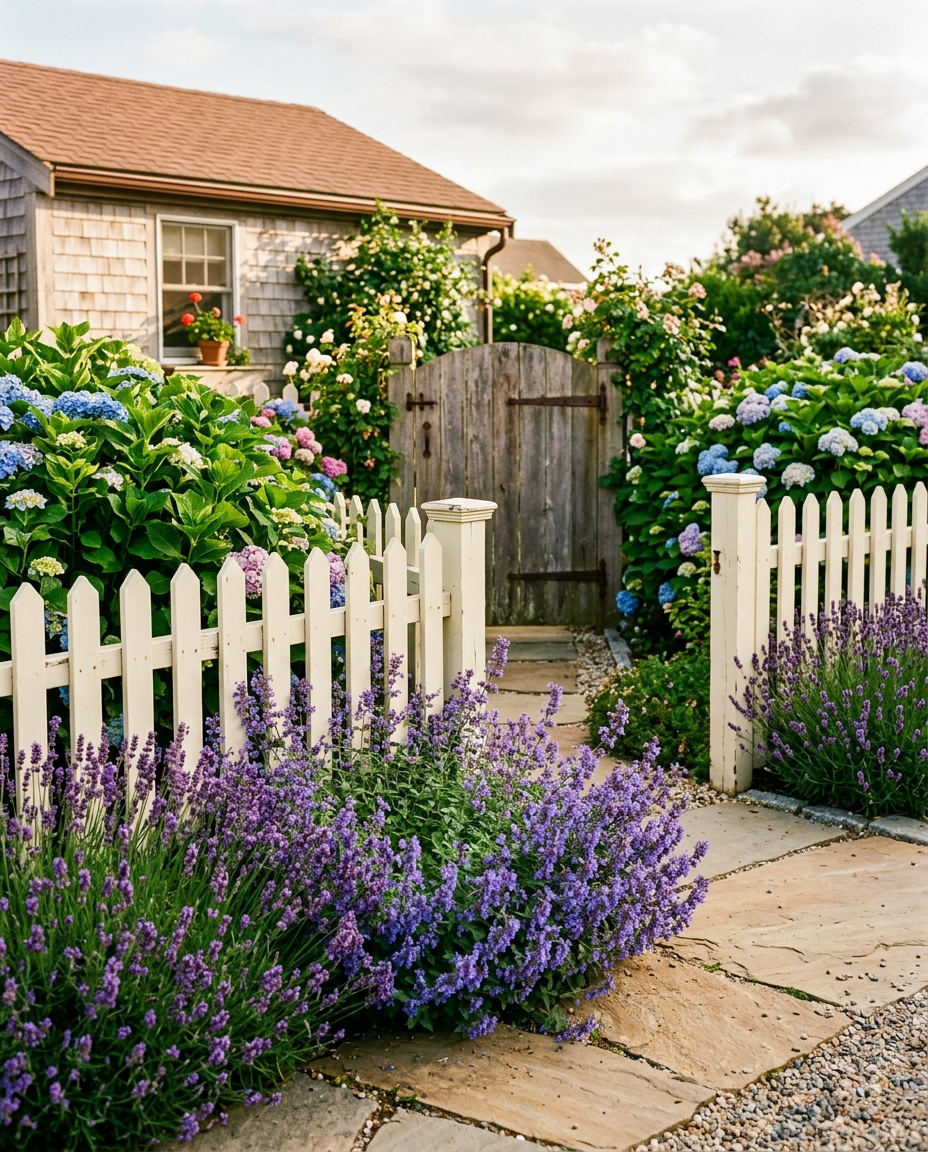
Vertical wood boards alternating on opposite sides of the frame so the fence looks finished from both yards. Reads as gracious. Built from 1x6 cedar on a pressure-treated frame. About $36 per linear foot. The breathable design lets wind pass through, which helps in lots where solid fences blow over.
The black-stained vertical board
Standard vertical 6-foot cedar fence stained matte black (Sherwin Williams Tricorn Black solid stain, or a Japanese shou sugi ban finish for the actually-charred version). Recedes into shade and makes plantings pop. About $32 per linear foot installed. The black-fence-with-white-house trick that won the last five years of landscape design awards.
Iron and brick combination
A 24-inch brick or stone pier every 8 feet with wrought-iron infill between, total height 5 to 6 feet. The most permanent fence type — 80+ year lifespan. About $120 to $200 per linear foot. Best for front yards or estate driveways, not back lot lines.
How to budget your fence build
For 100 linear feet of standard 6-foot residential fence: - Pressure-treated pine: $1,800 to $2,400 - Cedar vertical board: $2,400 to $3,600 - Cedar horizontal slat: $3,200 to $4,800 - Composite: $4,200 to $5,800 - Stone-and-iron: $12,000 to $20,000
Add 15% for grade work on uneven lots, 25% for gates (every gate post needs double depth and concrete). Pulling and disposing of an old fence runs $400 to $1,200 separately. Privacy hedges have a different math: lower install cost but you're waiting 2 to 4 years to get screening density. The privacy fence & hedge hub has more decision frameworks.
FAQ
Frequently asked questions
What's the cheapest backyard fence idea that still looks intentional?
A 6-foot pressure-treated pine board fence with a warm semi-transparent stain costs $18 to $24 per linear foot installed. The stain is what gets it past "lumber yard default." Without the finish it reads as utility; with it, residential.
How tall can a backyard fence be?
Most municipalities cap residential backyard fences at 6 feet. Front yard fences often cap at 4 feet. Check your zoning code (search "[your city] fence ordinance") before you build. HOAs almost always have stricter rules than the municipality.
What's the longest-lasting backyard fence material?
Stone-and-iron tops the list at 80+ years with essentially no maintenance. Composite is the long-haul wood replacement at 25+ years. Cedar lasts 20 to 30 if stained every 3 years; pressure-treated pine 12 to 18. The cheap fence is the one you replace twice in 25 years.
Do I need a permit for a backyard fence?
Often yes if the fence is over 6 feet, anywhere on the front-yard setback, or attached to a structure. Most jurisdictions allow up-to-6-foot interior fences without a permit. Always pull the permit if the fence is on the property line — neighbor disputes get harder to resolve without one.
What plants work best as a privacy hedge instead of a fence?
'Green Giant' arborvitae (8 to 15 feet, 36 inches on center) is the all-around answer. For tighter spots, 'Sky Pencil' holly. For zones 7+, leyland cypress (faster growth, shorter lifespan). For ornamental privacy, mass-planted 'Limelight' hydrangea reads as a planted screen by year three.
These 27 backyard fence ideas share one thing: the right fence is invisible the moment the planting catches up to it. Pick a material that ages well, install it correctly the first time, and let the catmint, the climbing rose, or the hedge take over the visual job within two seasons. The fence holds the line; the planting does the work.