Flower beds & borders · Photo Listicle ·
21+ Landscape Edging Ideas That Will Make Your Neighbors Stop
Affiliate disclosure · Earthwork earns commission on some links
Edging is the line between intention and chaos. A clean edge between bed and lawn carries about 60% of a yard's curb-appeal, regardless of what's planted on the other side of it. The worst yard with a crisp edge still looks better than the best yard with mulch creeping into the turf.
Here are 21 landscape edging ideas, material-specific and install-realistic, weighted toward the kind that age well across a decade. None of them require a contractor. Most cost under $25 a linear foot in materials.
Spade-cut bed line (the free option)
The fastest, cheapest edge: cut a 4-inch trench between bed and lawn with a square spade. Angle the lawn-side cut at 70 degrees, pull soil back into the bed, mulch the bed-side. Re-cut twice a year, in spring and late summer. Costs nothing but a sharp spade, and on a small property it's the right answer 80% of the time.
Stacked bluestone (the East Coast classic)
Pennsylvania bluestone scraps, set dry on a two-inch sand bed, three to six inches high. The face shows the natural cleft of the stone. Plant the bed 8 inches back from the stone face so the stone reads as a low retaining wall, not a curb. Costs $8 to $18 per linear foot in materials. Pair with classic flower beds & borders plantings that spill softly over the front.
Belgian block (the formal option)
Granite Belgian block, 4x4x9 inches, set on a two-inch concrete footing for permanence or a four-inch crushed-stone base for a softer install. Reads as historic against most house styles. Pricier than alternatives at $20 to $35 per linear foot, but it's the edging that's still there in 2050.
Steel landscape edging
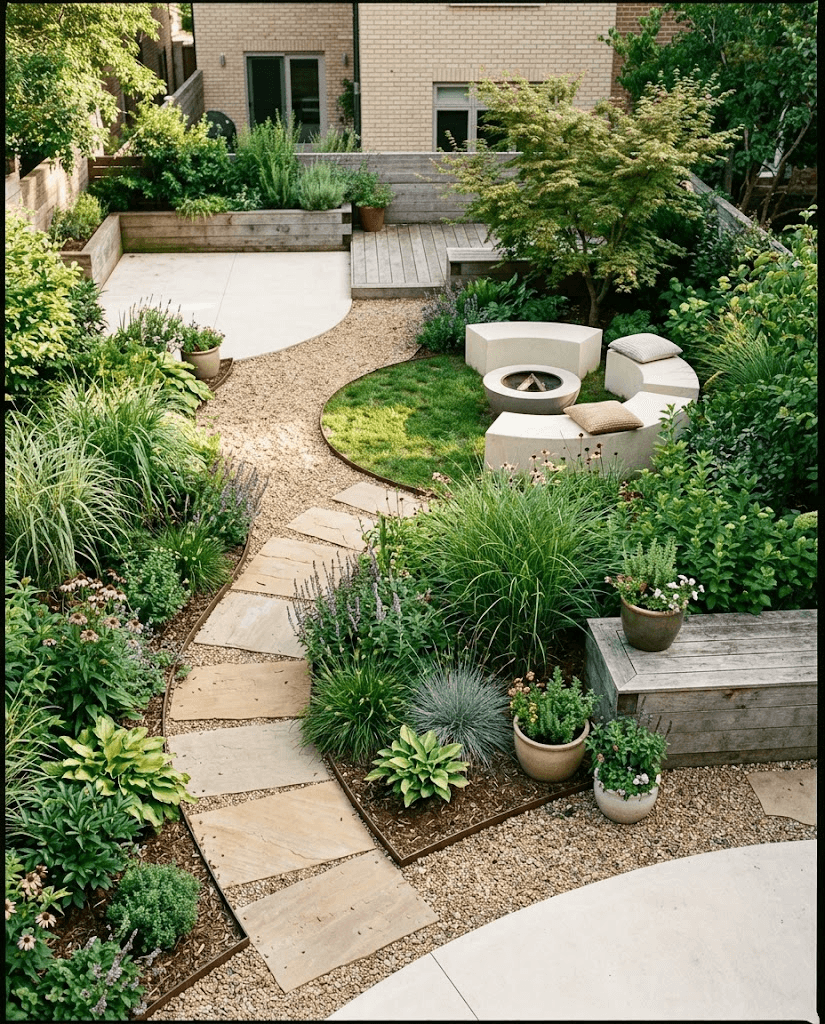
3/16-inch thick steel, 4 to 6 inches deep, set on a tight curve and staked every 3 feet. Powder-coated black or left to rust to a warm patina. Dead-on-modern look, especially against gravel beds or contemporary plantings. About $4 to $7 per linear foot plus stakes. Skip the thin aluminum stuff. It bends under a misplaced foot.
Cor-Ten steel for the architectural beds
The same steel idea, but Cor-Ten oxidizes to a deep orange-brown that gets richer over time. Pairs especially well with desert plantings, ornamental grasses, or any modern landscape. The rust does not spread or weaken structurally; it self-passivates after the first season. About $15 to $30 per linear foot.
Brick on edge (the cottage answer)
Reclaimed clay brick set vertically, two to three inches above grade, mortared at the base or set on a sand-and-gravel bed. The herringbone variant runs each brick at 45 degrees to the bed line, which adds visual texture. About $8 to $15 per linear foot in salvaged brick, more if you buy new.
Cobblestone (the cottage upgrade)
European street cobbles, 6-inch reclaimed granite or sandstone, set in mortar or sand on a compacted base. Looks like it has always been there. The price per linear foot is high ($25 to $50) but the install is permanent. No resetting, no re-edging. Reclaimed cobblestone from East Coast cities is the sweet spot.
Boulder edge (the West Coast and mountain answer)
Native fieldstone in 18-inch to 30-inch sizes, set so each boulder shows three flat faces and one buried face. Spaced every two to four feet, with the gaps planted in low ground cover (creeping thyme, dichondra). Best on yards with grade or exposed-rock context. Free if you have boulders on the property, $200 to $600 a ton if you're buying.
Rubber edging (don't)
Recycled-rubber edging that comes in 8-foot rolls. It looks bad on day one and worse on day 365. UV breaks it down, the bond unglues, and the curve sags. Skip it.
Plastic edging (mostly don't)
Same story. The exception: 4-inch black landscape edging used as a hidden subgrade restraint under brick or stone. It stays buried so you don't see it. As a visible edge, it's the giveaway that the budget ran out.
Concrete curb (the contractor answer)
Poured concrete curb, 6 inches wide, 4 inches above grade, in a continuous form. Costs $7 to $15 per linear foot installed. Lasts 30+ years. Reads as practical rather than designed, which is fine if practical is what you want.
Limestone block
Limestone blocks, 6 to 12 inches square, set dry on a compacted base. Warm cream-grey color that complements most planted beds. Heavier and pricier than concrete pavers, lighter and cheaper than granite. About $12 to $22 per linear foot.
Wood-board edging (only with the right wood)
Cedar 2x4s on edge, two stacked deep, secured to rebar driven into the soil. Stains to silver in two seasons, lasts 15 to 20 years if it's pressure-treated cedar or western red cedar. Skip pine, it rots in three. About $3 to $6 per linear foot.
Recycled railroad-tie edge
Old railroad ties cut to length, stacked or laid flat, anchored with rebar. The creosote keeps them from rotting for decades. Salvaged ties can read as warm and timeworn; new pressure-treated landscape timbers read as 1985. Get the salvaged version.
Bamboo edging (for the right yard)
3-inch thick bamboo poles, 12 inches deep, set vertical against a tight string line. Works in modern and Asian-influenced gardens, looks misplaced against a colonial. Lasts 5 to 7 years. Treat with linseed oil annually to extend.
Mortared river-rock edge
Rounded river rock, 2 to 4 inches diameter, mortared in a continuous strip 4 inches wide. The mortar shows, which is why it works only in cottage and rustic-style gardens. About $10 to $18 per linear foot for a homeowner build.
Shells (the coastal-Florida edge)
Oyster or clam shells, 2 to 4 inches deep, set in a 4-inch trench. Common in old Florida and Lowcountry gardens, and weirdly perfect against silver-leaved coastal plants. Replenish every two years.
How to install a stone edge that actually lasts
The base does the work. Excavate three inches below grade, lay a 2-inch base of compacted crushed stone, top with a 1-inch leveling layer of stone dust, then set the stones. Backfill with bed soil on the inside, lawn soil on the outside. Walk the line and confirm the top is level before mulching. Skip the base and the stones lift at the first freeze.
FAQ
Frequently asked questions
What's the cheapest landscape edging idea?
A spade-cut trench costs nothing but the labor. On a 100-foot bed line, that's about an hour of work and a $30 sharp spade. Refresh it twice a year and it stays crisp.
What's the longest-lasting landscape edging?
Granite Belgian block on a concrete footing, or poured concrete curb. Both last 30+ years with zero maintenance. Belgian block looks better as it ages; concrete looks the same.
How deep should landscape edging be installed?
The buried portion should be at least 60% of the total height. A 6-inch tall stone edge needs at least 3.5 inches buried. Less than that and the freeze-thaw cycle pushes it out within two seasons.
Can I install landscape edging without a contractor?
Yes for spade-cut, steel, brick on edge, plastic-as-hidden-restraint, and small-stone installs under 50 linear feet. Hire out for granite Belgian block (each piece weighs 30 pounds and the install is brutal), concrete curb (pour requires forms and timing), and any bed-line longer than 200 linear feet.
What's the best landscape edging for a curved bed?
Steel edging for tight curves, brick on edge for medium curves, Belgian block for gentle curves. Stone slabs like flagstone or bluestone work best on straight lines or very gentle arcs.
These 21 landscape edging ideas all share one thing: the edge does its work whether or not the planting cooperates. Mulch fades, perennials get tired, lawns thin out. A crisp edge holds the line through all of it. Pick the material that matches the house, the budget, and the labor you want to put in.